

Ndunduri AB
Ndunduri AB
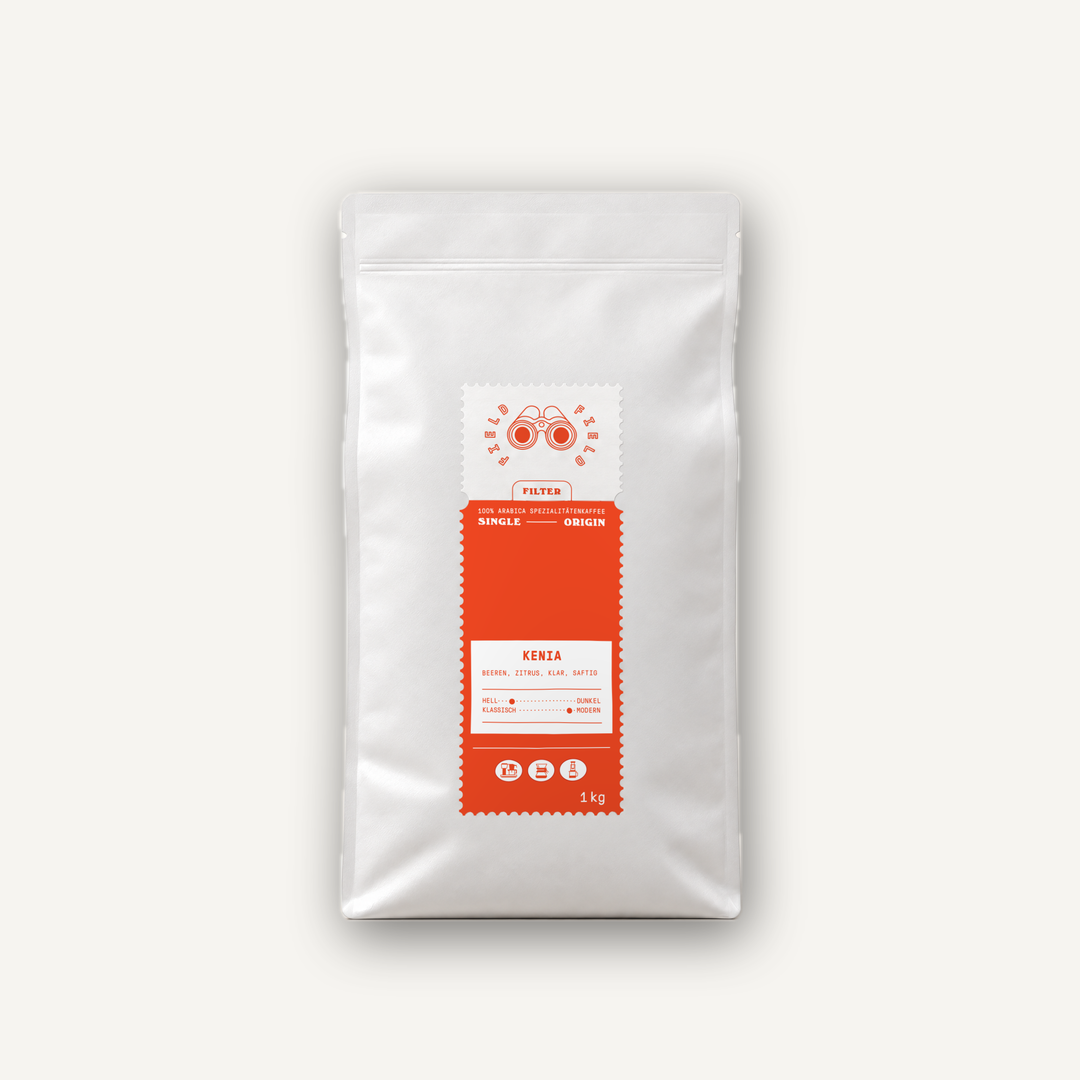
1kg
- Notes: 🫐 Blackcurrant, 🍊 Orange, 🍫 Cacao nibs
- Brew method: Filter
- Process: Washed
- Variety: Batian, Ruiru 11, SL28, SL34
- Origin: Kenya 🇰🇪.
- Region: Embu
- Producer: Ndunduri Factory
- Altitude: 1,600m
Roasted on
Ndunduri AB
€57,80
Couldn't load pickup availability
More about this coffee
More about this coffee
This AB lot of Batian, Ruiru 11, SL28 and SL34 is grown at around 1,600m in Embu County. The cherries are depulped at the Ndunduri station and then processed as a washed coffee.
Singular's post-it: Field's Kenya, lightly roasted for filter. Blackcurrant and orange bring the fruit, cacao nibs add a darker finish, for a cup that is easy to love every day.
Share

Ndunduri Factory
Embu, Kenya 🇰🇪
This AB lot comes from Ndunduri Factory, a washing station in Embu County, on the slopes of Mount Kenya, in operation since the early 1970s. Local smallholder farmers deliver Batian, Ruiru 11, SL28 and SL34 cherries there, grown at around 1,600m.
The coffee is washed: the cherries go through a disc depulper, which removes the skin and fruit, before fermentation, washing and drying.

Field Coffee Roasters
Germany 🇩🇪
Field Coffee Roasters was born from a shared desire. Several players on the Berlin scene, each with their own café, wanted to roast. Rather than each setting up their own structure, they decided to join forces. As co-founder Kresten Thøgersen puts it: "I am hyper aware of my weaknesses as an entrepreneur, and their strengths were my weaknesses, and vice versa."
The project is built around a simple promise: "Good vibes & great coffee". No needless talk, just a clear commitment: to produce quality coffees that are accessible and consistent. Field is the other face of Fjord, more direct, more everyday, but with the same high standards.
On the technical side, they roast in 10 kg batches on a Probat, tracking every curve with Cropster. The workshop runs up to 30 cycles a day, close to 700 kg a week. Their flavour philosophy is crystal clear: balanced, bright, easy-drinking coffees that you can love without an explanation.
Their sourcing relies on solid relationships with producers such as the Oliveira family in Brazil (Minas Gerais), the Batlle family in El Salvador, and farms in Colombia. Kresten insists: "direct trade" only makes sense if it truly benefits producers. Stability, fairness and volume matter as much as the quality of the bean.
Field coffees carry names like Cherry Ripe, a blend designed for espresso as well as filter, with notes of caramel, red apple and hazelnut. This "omni" approach illustrates their intent: to break down barriers and give pleasure without making things complicated.
Kresten likes to recall how much the Berlin scene has changed: "We went from one or two specialty spots to more than fifty in a few years." Field was born in this boom, as a friendly and solid answer to the needs of this new community.
Today, Field Coffee is known in Berlin as a reliable and cheerful player: a roastery that keeps its craft spirit but thinks big. In the cup, it is the happy simplicity of a well-made coffee, no compromise and no fuss.