

Kello Lalesa
Kello Lalesa
250g
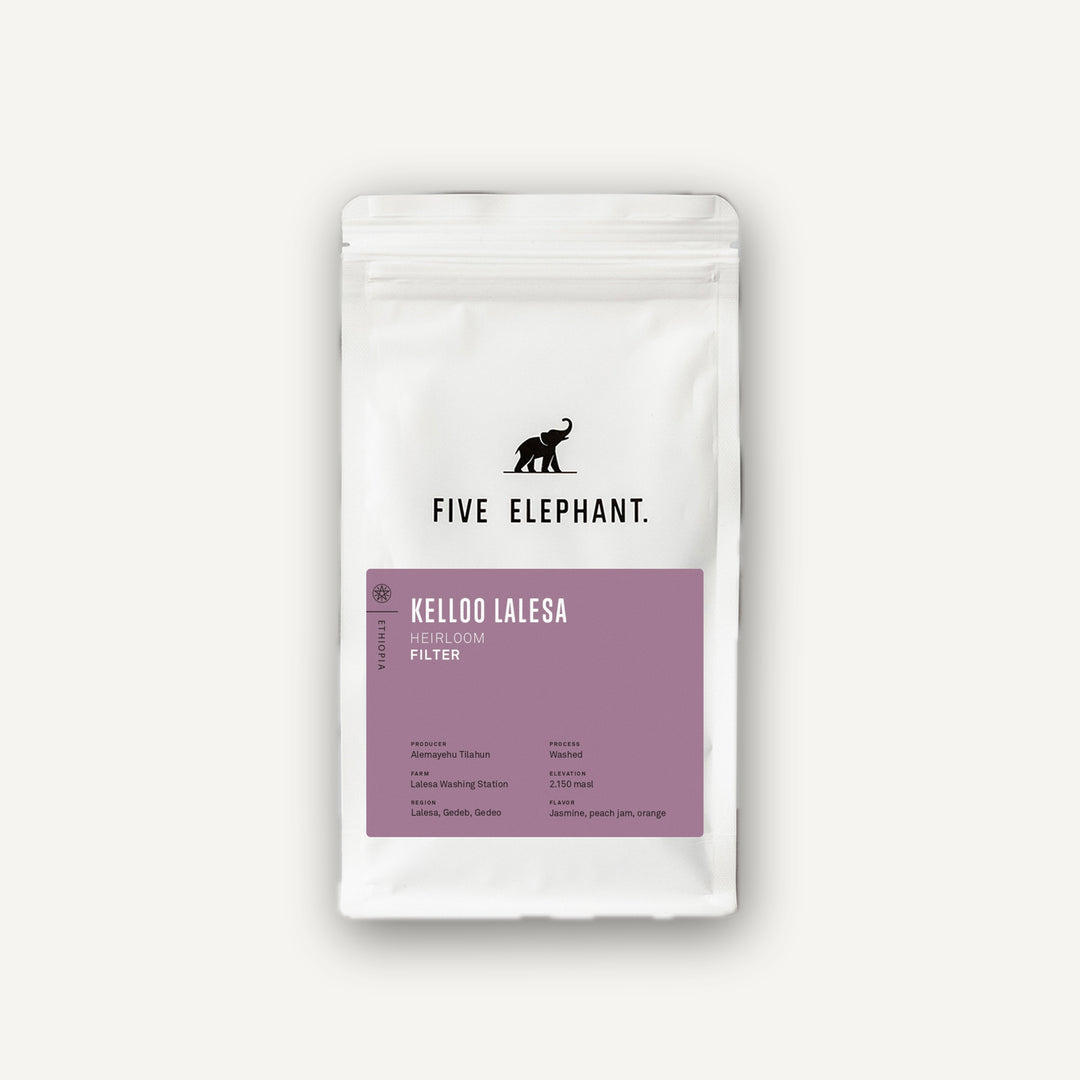
- Notes: 🌸 Jasmine, 🍑 Peach jam, 🍊 Orange
- Brew method: Filter
- Process: Washed
- Variety: Heirloom
- Origin: Ethiopia 🇪🇹.
- Region: Lalesa, Gedeb, Gedeo
- Producer: Alemayehu Tilahun and Origin Land Coffee
- Altitude: 2,150m
Roasted on
Kello Lalesa
€26,90
Couldn't load pickup availability
More about this coffee
More about this coffee
This lot of heirloom varieties is processed at 2,150m at the Lalesa washing station, in the Gedeb district. The cherries are pulped, fermented under water for about 72 hours, then dried on raised beds.
Singular's post-it: a round, balanced and complex cup. Jasmine opens, peach jam and orange bring the fruit, with touches of baked apple, biscuit and black tea on the finish.
Share
Alemayehu Tilahun and Origin Land Coffee
Lalesa, Gedeb, Gedeo, Ethiopia 🇪🇹
Kello Lalesa is a washed lot from Lalesa, in the Gedeb district of the Gedeo zone. It is produced by Alemayehu Tilahun and Origin Land Coffee at the Lalesa washing station, at 2,150m, with cherries delivered by smallholders from the surrounding area. A native of the Gedeo zone, Alemayehu Tilahun built the station in 2018 so he could buy red cherries from his neighbours. Here the coffee trees grow in the shade, in dense semi-forest vegetation, among false banana trees.
At the station, the cherries are sorted by hand, pulped on a traditional disc pulper, then fermented under water for about 72 hours. The coffee is then graded in channels, soaked, and dried on raised beds for 8 to 20 days. The team keeps the Kello name for lots that lean towards yellow fruit, florals, peach and stone fruit.
Five Elephant
Germany 🇩🇪
When Kris and Sophie Schackman opened the first Five Elephant in Berlin in 2010, they did not yet know they were becoming pioneers. At the time, speciality coffee was almost invisible in Germany: few roasters, little structured coffee culture. So they decided to do things their own way, boldly and humbly, starting with what they knew: quality, transparency and human connection.
Kris grew up in the United States, where he absorbed the specialty movement early on. When he arrived in Berlin, he found almost untouched ground. The idea of direct trade seemed natural to him, but here it came as a surprise: "When we opened, few people understood what it meant to buy directly from a producer, without too many intermediaries," he says. In Berlin, some thought he was mad. He saw an opportunity.
At the start, they worked as a duo. Sophie took care of, among other things, the pastry side, service and hospitality; Kris explored roast profiles, beans and selection. Together they built their identity: single origin coffee, transparent prices, and packaging that is understated but carries a story.
Their philosophy has not changed with growth. Today Five Elephant roasts several dozen tonnes a year and runs four cafés in Berlin, but the founding principles remain at its heart. Sophie says she "still feels the same" as at the very beginning, sitting next to Kris in the café, when everything came down to the bean and the cup.
They develop long-term partnerships with producers in Brazil, Kenya, El Salvador, Colombia and beyond. These are not mere suppliers but allies. They work together on drying methods, infrastructure and better farming practices, always with the idea that coffee should improve the lives of the people who grow it. Sophie recalls that when visiting farms, she saw women pickers carrying sacks on their backs up the slopes while looking after their families, an image that stayed with her: "they deserve more than they get".
Their roasting aims for aromatic clarity. Kris prefers working with washed coffees, with few extreme profiles, to let "the land speak". He notes that a good, well-roasted coffee reveals "the story of the soil" like delicate music. Colour, density, thermal rhythm: everything is designed to suggest rather than overpower.
Today Five Elephant is a reference in Berlin: a brand that emerged with the speciality coffee movement in Germany and continues to inspire. Customers come in for an espresso and leave with bags, ideas, sometimes even the urge to open a café of their own. They often come back, saying: "I came here ten years ago, that's what made me want to."
Five Elephant is the story of a couple who planted a seed, with patience, sincerity and taste, and grew a house that the coffee world recognises today.